Instructions
Prepare the Coffee: If using whole coffee beans, grind them very finely using a coffee grinder or spice grinder until they reach an almost powder-like consistency. The finer the grind, the smoother your chocolate will be. You want the texture to be similar to cocoa powder. Set aside. The coffee adds depth and complexity to the chocolate without making it taste like coffee.
Combine the Base: In a medium saucepan, whisk together the unsweetened cocoa powder and ground coffee until evenly mixed. These dry ingredients form the foundation of your chocolate’s flavor. The cocoa provides that classic chocolate taste, while the coffee enhances the cocoa’s natural notes and adds a subtle richness.
Add the Liquid: Gradually pour the apple cider into the cocoa mixture while whisking constantly. Start with just a small amount and whisk vigorously to create a smooth paste before adding more liquid. This technique prevents lumps from forming. Continue adding the cider slowly while whisking until you have a smooth, thick mixture. The apple cider serves multiple purposes: it provides natural sweetness, adds moisture to bind the ingredients, and contributes a subtle fruity undertone that complements the dark chocolate.
Heat and Mix: Place the saucepan over medium-low heat. Stir continuously with a whisk or wooden spoon as the mixture heats. You want to warm it gently, not boil it. Heat for five to eight minutes, stirring constantly, until the mixture becomes smooth, glossy, and flows easily like melted chocolate. The gentle heat helps the ingredients fully combine and creates that signature chocolate sheen. If using vanilla extract or sea salt, stir them in now. The salt enhances all the flavors, while vanilla adds warmth.
Strain for Smoothness: For the silkiest chocolate, pour the warm mixture through a fine-mesh strainer into a clean bowl or measuring cup with a pour spout. Use a spatula to press the mixture through, removing any lumps or larger coffee particles. This step is optional but creates a more refined texture similar to commercial chocolates.
Mold the Chocolates: Pour or spoon the warm chocolate mixture into silicone molds, filling each cavity to the top. Silicone molds work best as the chocolate releases easily once set. If you don’t have chocolate molds, you can pour the mixture into a parchment-lined baking pan and cut it into squares once set. Tap the molds gently on the counter several times to release any air bubbles trapped in the chocolate. Smooth the tops with a small spatula or the back of a spoon for a clean, professional finish.
Set the Chocolate: Place the filled molds on a baking sheet for stability and transfer to the refrigerator. Chill for at least two hours, or until the chocolates are completely firm and have a matte finish. The chocolate will solidify as it cools, transforming from a liquid mixture into firm, snappable squares. For faster setting, you can place them in the freezer for thirty to forty minutes.
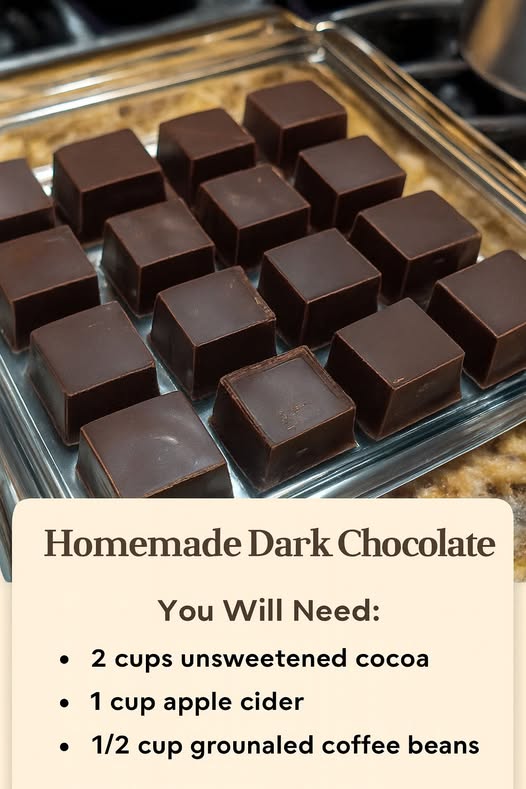
Unmold and Store: Once completely set, gently pop the chocolates out of the molds. They should release easily from silicone molds. If using a pan, lift the parchment paper and cut the chocolate into squares with a sharp knife. The chocolates should be firm, smooth, and have a nice snap when broken.
Serve: These dark chocolates are intensely flavored and best enjoyed in small amounts. The combination of cocoa, coffee, and apple cider creates a complex flavor profile that’s sophisticated and adult-oriented. Store in an airtight container in the refrigerator for up to two weeks or at room temperature in a cool, dry place for up to one week.
Tips for Success
Use high-quality unsweetened cocoa powder for the best flavor. Adjust sweetness to your preference by adding powdered sugar or honey. Strain the mixture for the smoothest texture.
Variations
Add orange zest for chocolate orange flavor. Mix in chopped nuts before molding. Sprinkle with sea salt or freeze-dried fruit on top before setting.
Storage
Store in an airtight container in the refrigerator for up to two weeks or freeze for up to two months.

